Crisis in Metallurgy Threatens Budgets of Ukrainian Cities and State Financial System
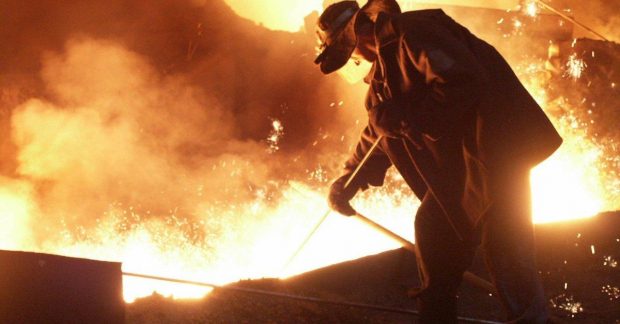
Production cuts in Ukraine's mining and metallurgical complex trigger a chain reaction, leading to tax deficits, job losses, and reduced funding for local communities.
 💼Economy
Photo: UNIAN
Key points
- Ukraine's metallurgy sector shows a significant drop in tax payments amid wartime and logistical challenges.
- Production cuts in the metallurgical complex trigger a chain reaction across energy, transport, and related markets.
- Industrial cities are forced to sequester budgets due to falling tax revenues.
- The crisis increases the country's reliance on external financing during record defense spending.
Ukraine's metallurgical sector is facing a severe crisis that poses serious risks to financial stability at both national and local levels. Due to ongoing shelling, logistics bottlenecks, export restrictions, and electricity shortages, leading industry enterprises are forced to cut production volumes. This directly impacts budget revenues at all levels.
Cascade Effect for the Economy and Regions
According to analysts, over the first three quarters of the year, key market players demonstrated a significant drop in tax payments. Specifically, Metinvest reduced its budget contributions by 6%, while the Dniprovsky Metallurgical Plant cut its figures by nearly half. Metinvest CEO Yuriy Ryzhenkov described the current situation as critical for the industry and the country's export potential.
The contraction of metallurgical operations hits related sectors such as energy, transport, engineering, and small businesses. As a result, the state budget misses out on billions of hryvnias in corporate income tax and VAT at a time when the country urgently needs resources for defense. This hits industrial cities especially hard, where large enterprises form the backbone of local treasuries through personal income tax and land fees.
Local authorities in regions where these enterprises operate are already forced to sequester budgets and freeze infrastructure projects. Expenditures on utility networks, roads, schools, and healthcare are now at risk. Additionally, communities are losing the ability to co-finance international grant programs due to a lack of matching funds.
Source UNIAN — unian.ua/society/kaskadniy-efekt-padinnya-virobnictva-u-metalurgiji… ↗
Read next
 🎓Education
Denmark to implement nationwide school smartphone ban
The Danish government is preparing legislation to restrict mobile device usage in schools following a decline in student academic performance.
 💡Tech
Notary Digitization: Ukraine Prepares to Launch a Single System
The Ukrainian government is reforming the notary sector by integrating core registries into a single digital platform starting in 2027.
 🇺🇦Ukraine
European Commission favors multilateral format for negotiations with Russia
The European Commission has commented on the invitation from the Russian side, emphasizing the importance of a multilateral dialogue involving allies.
 🏛️Politics
Debate over NABU's methods: SAPO prosecutor praises the agency's media team
SAPO prosecutor Rostyslav Batig commented on accusations of replacing evidence with media campaigns, praising the work of NABU's video editors.
 🛡️Security
DTEK Energy Workers Set Annual Record for Restoring Power After Attacks
Between November 16 and 22, DTEK specialists restored electricity for 3.5 million households across several Ukrainian regions and Kyiv.
 🧠AI Analysis
Artificial Intelligence on the Frontline: How Ukrainian Ground Robotic Systems Are Evolving
Ukraine's defense industry is actively integrating artificial intelligence into ground robotic systems (GRSs) to minimize dependence on operators and radio links.