British Freshmen Discover 2,000-Year-Old Roman Treasures During Fieldwork
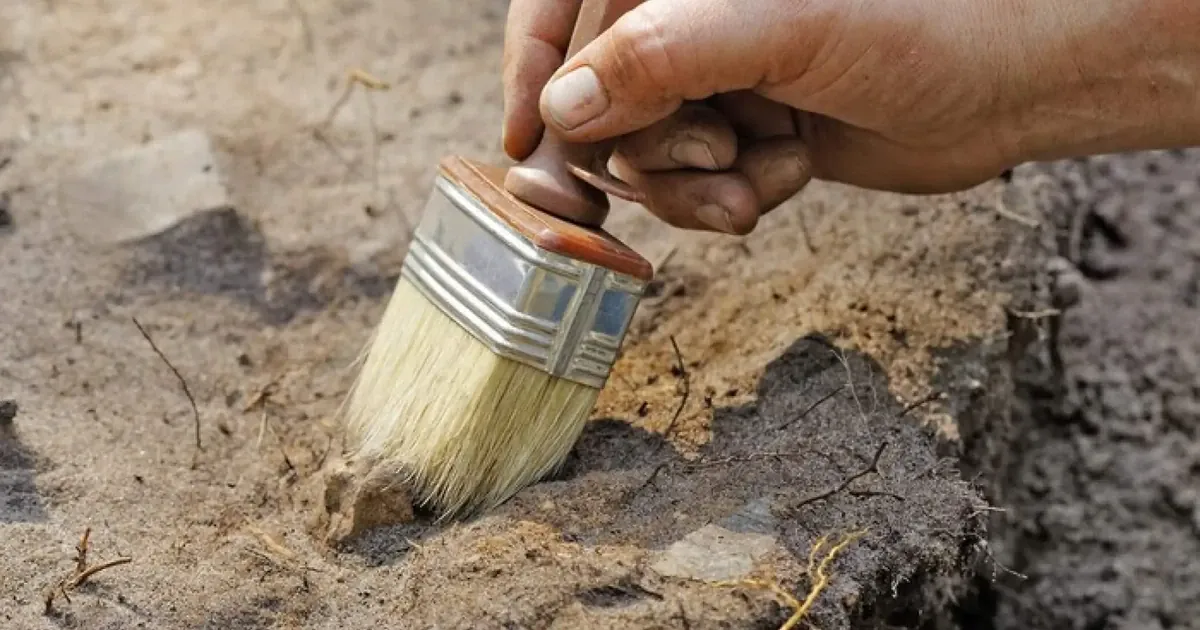
Newcastle University students participating in archaeological excavations in northern England have uncovered unique Roman-era artifacts, including a nearly perfectly preserved gold chain.
 🚨Events
Photo: TSN
Key points
- Freshmen discovered a Roman-era gold chain on the very first day of excavation.
- The dig took place in the Redesdale valley near Hadrian's Wall.
- Finds included a lead ingot with an inscription, a military fitting, and a Jupiter intaglio.
Аrchaeological fieldwork for first-year students at Newcastle University in the United Kingdom has yielded sensational results. At an excavation site in the Redesdale valley, near the historic Hadrian's Wall, beginners stumbled upon rare items dating back to the Roman Empire. Among the most prized discoveries is a nearly undamaged gold chain roughly two thousand years old, preserved in such pristine condition that it could still be worn as jewelry today.
Surprising Discoveries From Day One
Opportunities to make a mark presented themselves to the students from the very beginning. On the opening day of the dig, freshman Eliza Zallu uncovered a gold ornament about seven centimeters long. According to the student, such success at the very start of her archaeological career came as a complete surprise. Experts note that the piece was crafted using the loop-in-loop technique, characteristic of high-quality Roman jewelry typically worn by affluent military personnel or nobility.
In addition, other members of the expedition recovered numerous accompanying artifacts. Specifically, researchers found a piece of lead bearing a Latin inscription, a gilded military strap fitting, and a carnelian intaglio depicting Jupiter, the supreme Roman deity. The team also cataloged ancient coins, spearheads, and fragments of pottery marked with graffiti.
Significance of the Long-Term Regional Study
Newcastle University has been conducting scientific research at this site for over three decades. The current phase of work, launched in 2021, focuses on examining the remains of ancient buildings and production structures. According to specialists, these discoveries help reconstruct the daily life of the Roman frontier and shed light on the interactions between the Roman authorities and the local population.
Source TSN — tsn.ua/tsikavinki/pershokursnytsi-rozkopaly-skarby-vikom-2000-rokiv-shc… ↗
Read next
 🛡️Security
Search operations conclude in Dymer: death toll rises to three following attack
Emergency services recovered the body of the third victim from the rubble of a residential building in Dymer.
 🛡️Security
Sweden Develops New Interceptor Drone to Counter Jet-Powered UAVs with Ukrainian Partnership
Swedish startup Nordic Air Defence has introduced the K200 autonomous interceptor designed to track and destroy fast enemy drones.
 🏙️City
Incident with the Russian vessel Sparta II: Estonia's position and security context
Estonian Foreign Minister Margus Tsahkna stated that the attack on the Russian vessel Sparta II is an exercise of Ukraine's right to self-defense.
 👥Society
Returning to the Profession: A Veteran's Experience of Employment with a Disability in the Modern Labor Market
The story of a veteran who lost his sight due to a blast injury illustrates the challenges and opportunities of reintegrating former military personnel into legal practic…
 👥Society
Novhorod-Siverskyi community bids farewell to fallen soldier Serhii Buhera
Chernihiv region paid its last respects to defender Serhii Volodymyrovych Buhera, who lost his life while performing military duties in the Sumy direction.
 👥Society
Defense Forces strike strategic rear facilities of the enemy
Over the past day, Ukrainian military targeted several important enemy objects in temporarily occupied territories, including an ammunition depot in Crimea, command posts…