NASA's Technological Challenge: What is Needed for a Permanent Moon Base
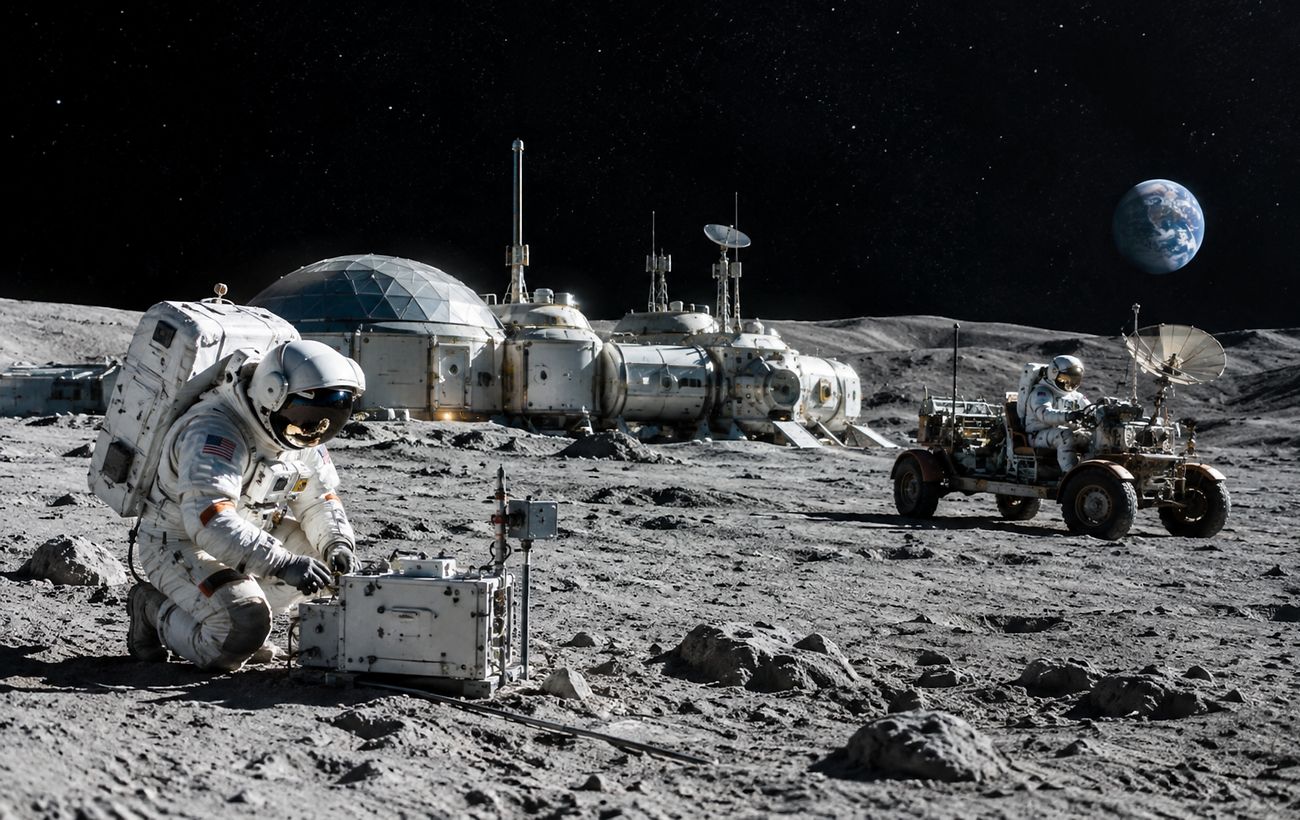
NASA is developing key engineering solutions for long-term human presence on the Moon, focusing on energy, resource extraction, and radiation protection.
 💡Tech
Photo: RBC-Ukraine
Key points
- Development of nuclear reactors for stable power supply
- Extraction of oxygen and water from lunar soil
- Creation of protection systems against radiation and abrasive dust
Lunar exploration requires a shift from short-term expeditions to the establishment of a permanent base. To achieve this, NASA and international partners are working on seven critical technologies designed to ensure the autonomy of human settlements on Earth's satellite.
Energy and Autonomous Life Support
One of the primary challenges is stable power supply, as the lunar night lasts approximately 14 Earth days. In addition to advanced solar panels, the agency is exploring the use of compact nuclear reactors, such as the Lunar Reactor-1, with testing scheduled for 2030. Concurrently, the ISRU concept—In-Situ Resource Utilization—is being developed. This will allow for the extraction of water from ice at the lunar south pole and the production of oxygen directly from regolith.
Safety and Protection from External Factors
Beyond energy, protection from the harsh lunar environment remains critical. Lunar dust, which has abrasive properties, requires new cleaning methods, such as electrodynamic shields. Meanwhile, the lack of an atmosphere forces engineers to design living modules covered by a layer of soil, which will serve as a natural barrier against cosmic radiation and micrometeoroids.
Source RBC-Ukraine — rbc.ua/ukr/news/vid-dernogo-reaktora-5g-shcho-potribno-nasa-1794836… ↗
Read next
 👥Society
Melamine Sponges for Cleaning: Safe Usage Rules at Home
We explain the features of popular melamine sponges for household cleaning and the safety rules for cleaning various surfaces.
 ⚽Sport
Dramatic overtimes and favorite wins: how the Basketball Superleague matches concluded
The latest matches of the Ukrainian Basketball Superleague regular season wrapped up with fierce battles, stunning comebacks, and key victories for top contenders.
 🇺🇦Ukraine
Poland Demands NATO Strengthen Air Defense Following Missile Incursion
The Polish Ministry of Defense insists on bolstering the air defense of the Alliance's eastern flank after Russian missiles breached Polish airspace.
 👥Society
Poland Reports Russian Disinformation Campaign Regarding Alleged Ukrainian Attack on Kaliningrad
Polish and Lithuanian officials urge citizens to ignore massive social media fake news campaigns orchestrated by Russia concerning alleged joint strikes on the Kaliningra…
 🏙️City
Government Launches Digital Platform for Critical Infrastructure Monitoring
Prime Minister Sergii Koretskyi announced the creation of a digital tool for real-time response to energy system failures and the involvement of military specialists in r…
 🏙️City
Military Specialists May Be Engaged in Energy Infrastructure Repairs
The government is considering involving military engineers and electricians in repairing damaged energy facilities to speed up restoration work.