Neuroscience Breakthrough: Scientists Debunk 150-Year-Old Theory and Move Closer to Restoring Speech
American researchers have discovered a previously misunderstood brain region responsible for planning words before they are spoken, challenging a century and a half of neurological dogma.
 💡Tech
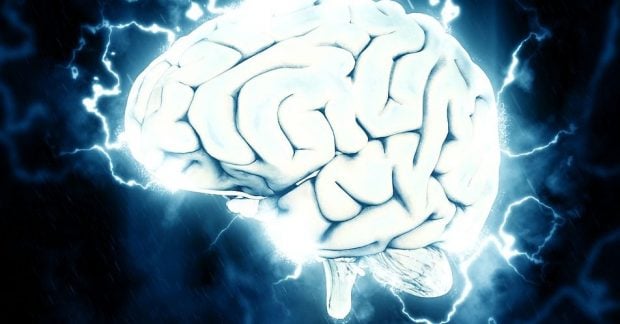
Photo: UNIAN
Key points
- Scientists debunked a 150-year-old theory regarding the brain's speech mechanisms.
- The lpSTG brain region activates a quarter-second before a word is spoken.
- Findings pave the way for advanced brain-computer interfaces to restore communication.
Modern neuroscience faces a significant paradigm shift regarding how the human brain processes and produces language. A team of specialists from the University of California, San Francisco, led by Edward Chang, has conducted a comprehensive study that fundamentally alters our understanding of the central nervous system. The researchers demonstrated that the brain systems responsible for comprehending and generating words are interconnected much more closely than previously believed over the past 150 years.
A New Perspective on Wernicke's Area and the lpSTG
During their scientific work, the team focused on a specific subsection of Wernicke's area known as the left posterior superior temporal gyrus (lpSTG). According to findings published in the journal Science, neurons within this region activate approximately a quarter of a second before a person actually speaks a word. This neural activity builds a preliminary blueprint of the upcoming utterance, encoding general word characteristics such as length, syllable count, and usage frequency.
"This discovery helps solve a longstanding mystery in neuroscience," the researchers note.
For decades, the medical community relied on conclusions drawn by German neurologist Carl Wernicke in the 1870s, who suggested that the posterior temporal lobe contained auditory word images meant to translate intentions into physical articulation. However, because of its location within the auditory cortex, it was primarily viewed as a comprehension center rather than an active production hub.
Implications for Medicine and Brain-Computer Interfaces
The practical significance of this discovery is immense, offering promising advancements for neurosurgery and emerging technologies. Before performing complex brain surgeries, medical professionals will potentially be able to map speech areas with greater precision, minimizing the risk of permanent damage. Additionally, the lpSTG could serve as a novel target for advanced brain-computer interfaces (BCIs).
While existing BCI technologies typically decode signals from motor areas controlling the vocal tract, these regions may be compromised in individuals with severe paralysis. Because the lpSTG activates at an earlier stage of speech generation, it provides an alternative source of signals to decode intended words. This development paves the way for more sophisticated communication systems, helping people with severe speech impairments interact more fully.
Source UNIAN — unian.ua/science/vcheni-znayshli-v-mozku-zonu-yaka-po-inshomu-vpliv… ↗
Read next
 ⚽Sport
German-Ukrainian Defense Partnership: Friedrich Merz Identifies Key Obstacles
During the economic forum in Berlin, German Chancellor Friedrich Merz outlined prospects and barriers in military-industrial cooperation with Ukraine.
 ⚽Sport
Parliamentary transparency in focus: experts outline four steps to open Verkhovna Rada
During Global Parliamentary Openness Week, experts assessed the transparency of the Verkhovna Rada and defined key steps for improvement.
 🚌Transport
Official exchange rates for November 23: Ukrainian hryvnia strengthens
The National Bank of Ukraine has set the official exchange rates for Monday, November 23, showing a slight strengthening of the hryvnia against major foreign currencies. …
 💼Economy
Infrastructure Attack: Repair Crew Targeted by Repeated Drone Strike in Chernihiv Region
In a border community of Chernihiv region, a crew from JSC Chernihivoblenergo came under a drone attack while disconnecting power to a burning building. The workers were …
🇺🇦UkraineFriedrich Merz outlines two key conditions for continued German financial support to Ukraine
German Chancellor Friedrich Merz addressed the German-Ukrainian Economic Forum in Berlin, setting clear prerequisites for long-term financial assistance and investments.
 🚨Events
Court Sentences Member of Parliament to Prison in Bribery Case
The High Anti-Corruption Court found MP Serhii Kuzminykh guilty of accepting an undue advantage and sentenced him to three and a half years in prison.